

Sustainable Furniture
In the last decades, we have witnessed a rapid growth in the production and consumption of products worldwide. The lack of consideration for sustainability in product design and manufacturing has led to a series of negative impacts on our planet. From the overexploitation of natural resources to the excessive generation of waste, the effects of the lack of sustainable design can be observed everywhere.
Inspired by the social behavior of mycelium, "Somos" aims to translate the imperceptible networks that connect all forms of life through a functional and modular design with a focus on sustainability.
Through 3 pieces of furniture, the significant importance of connectivity among beings and the sustainable process is showcased, valuing the impact that these objects have both individually and collectively. They represent a unique aspect of mycelial symbiosis: nutrition, communication, and interdependence in design usage. "somos," designed with natural materials, seeks to create a sustainable visual and tactile experience, promoting communication and connection between products and users while reconnecting with the environment.

Mycelium are filamentous structures formed by hyphae, thin extensions of fungal cells, essential for the feeding and reproduction of fungi. One fascinating way in which mycelium connect these networks is through symbiotic associations.
In a human context, we can draw parallels between these mycelial networks and our interpersonal relationships. Just as mycelium connect different organisms in an ecosystem, our relationships connect us with friends, family, and other individuals in our community.

Just as mycelium facilitate the exchange of nutrients and knowledge among plants, our human relationships allow us to share experiences, emotional support, and material resources. These interactions foster personal development and emotional well-being, contributing to the healthy growth of the community. Recognizing and valuing these connections strengthens our human relationships and promotes a deeper sense of community and reciprocity.
For the next phase of exploration, a focus on organic and circular forms was chosen. This decision is based on the intention to promote interaction among individuals, thus creating a more inclusive environment conducive to human connection.

The embrace of these forms is conceived as a means to generate a welcoming and appealing environment that naturally invites active participation and social exchange. With the previous points in mind, further exploration was undertaken in the product design and crafting, aiming for a better representation of functionality and aesthetics.

The final design consists of three large tables, two of them 1 meter long, in an elongated circular shape, and one circular table/seat.
The design of each furniture leg is inspired by the mycelial networks of fungi, which were translated into the foundations of each product, showcasing the same importance of foundations and bonds that we, as human beings, have.
On the other hand, for the round shapes, it was based on the principles and philosophy of Ilse Crawford, an interior designer.
Spaces designed by Crawford act as gathering points where people can come together, share ideas, and cultivate meaningful relationships. It is in these spaces where Crawford's design magic becomes most apparent, creating not only beautiful places but also transformative experiences.
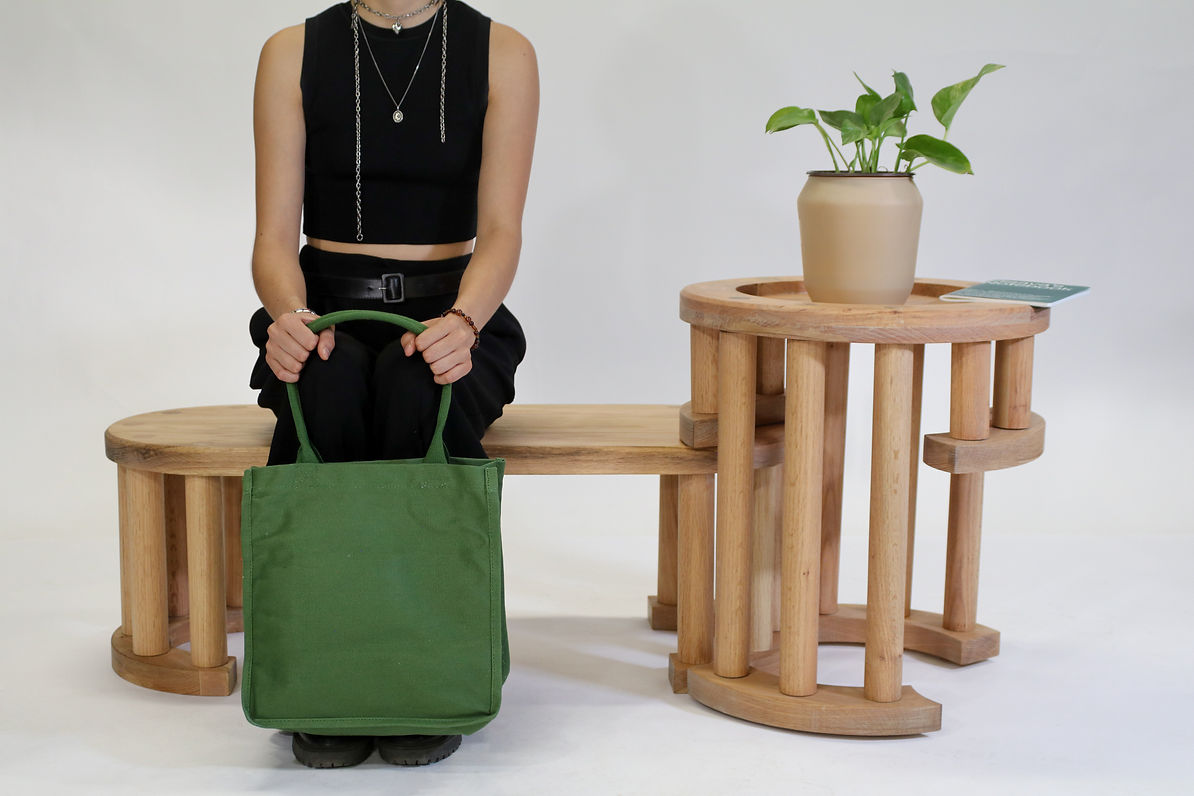
"somos" proposes to create furniture centered on the user and the community, strengthening social bonds, integrating inclusivity in design, and promoting sustainability in the manufacturing process. The project philosophy aims to highlight the significant importance of connectivity among individuals, both in the relationship established with the product and in the concept that fosters a deep bond with it.
_JPG.jpg)


Branding
The "somos" icon is inspired by the conceptualization of the project and the product itself. The goal was to abstract the shape of the product, transforming it into a visual element, resulting in the logo. It includes six lines simulating the wood grain in body 2 and a circle in body 1, representing the circular piece. Thanks to this, a modern and dynamic logo is created that can convey the brand's values.


For the logo, the decision was made to use the color green, as earthy tones are making a comeback according to trend research. Within my concept, green is an essential color that will add value to both the product and the brand. Additionally, for the typography, a simple, modern, and rounded font was chosen to convey a sense of comfort and encourage social interaction.
